
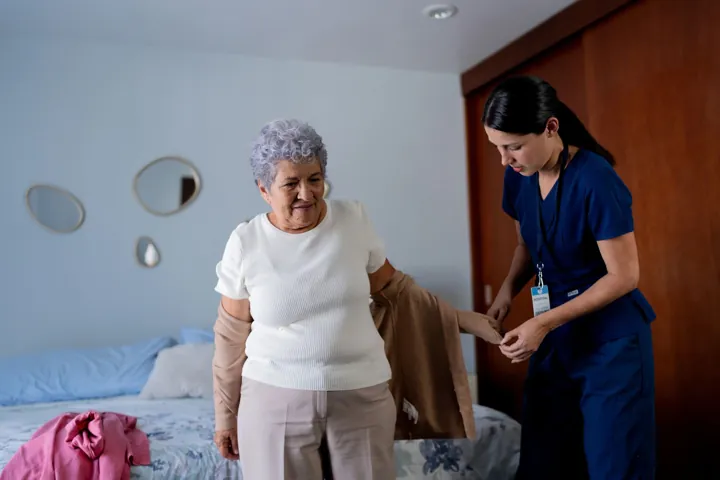
For many families, bathing is where the worry starts. A parent who has always been private now skips showers, or you find out about a slip in the tub weeks after it happened. Bathing combines everything that makes falls likely: wet surfaces, stepping over a tub edge, standing on one foot, and getting up from low seats.
Why bathing gets hard
- Balance and leg strength decline, so stepping over a tub wall becomes risky
- Arthritis makes reaching feet, back and hair painful
- Fear of falling leads people to avoid bathing altogether
- Memory changes can make the steps of bathing confusing
- Embarrassment keeps people from asking for help
Make the bathroom safer first
Small changes reduce risk dramatically. Many cost less than a single co-pay.
- Grab bars by the tub and toilet, installed into studs (towel bars are not grab bars)
- A shower chair or tub transfer bench so bathing happens seated
- A handheld shower sprayer
- Non-slip mats inside and outside the tub
- A raised toilet seat or toilet safety frame
- Night lights from the bed to the bathroom
How to help without taking over
- Pick a consistent time of day your parent prefers, often mid-morning when they're warm and rested
- Warm the bathroom and have towels and clothes ready before starting
- Explain each step before you do it
- Let them wash everything they can reach themselves
- Keep them covered with a towel over shoulders and lap
- Check skin for redness or sores and mention changes to the doctor
When to bring in personal care
If a parent has fallen, if you're physically straining to help, if bathing has become a source of conflict between you, or if you simply can't be there at the right times, a trained caregiver can take on this part of the day. Many families find the relationship with their parent improves once they're not the one in the shower.
At At Your Service, personal care starts with a free in-home assessment that includes a bathroom safety review. You'll get a written plan that says exactly when caregivers come and what they'll help with.